Category: Asynchronous
-
Podcasts for Teaching and Learning
According to an Ofcom report in September 2024, almost 20% of UK adults listen to at least one podcast a week and among 15-24-year-olds the listening figures are increasing (Ofcom, 2024). With it being a popular and growing format, then why not use it as a teaching and learning resource…
Written by
-
Moodle Activities: What is H5P?
H5P is an activity tool within Moodle you can use to build a huge range of asynchronous activities to enhance the students’ learning experience, including: H5P stands for HTML5 Package. It’s an open‑source tool that allows you to create interactive learning content without needing to know any code. All content…
Written by

-
E-modules: A Case Study
All Articles, Asynchronous, Case Studies, Digital Learning, Learning Design, Moodle, Spotlight Post, Teaching and LearningWhat is an e-module? In this context, an e-module is an asynchronous, online learning module on a specific, standalone topic within a larger course. At the start of this academic year, the following two e-modules – a collaboration between Course teams and the Digital Learning team – were made available…
Written by

-
Miro: Talktrack and Presentation Notes
Talktrack Talktrack is a new function on Miro that allows users to add a video to a frame. This works similar to cameo in PowerPoint. Anyone who has been added as part of the team for that board can add a Talktrack. This can be used for; This tool is…
Written by

-
Asynchronous Learning In Moodle
Asynchronous learning activities don’t require students to be online at the same time. For example: Writing a private reflection Watching a video Collaboratively editing a shared online document Giving peer feedback Participating in a forum discussion Asynchronous learning activities give students flexibility and provide extra time to process, practice, reflect…
Written by

-
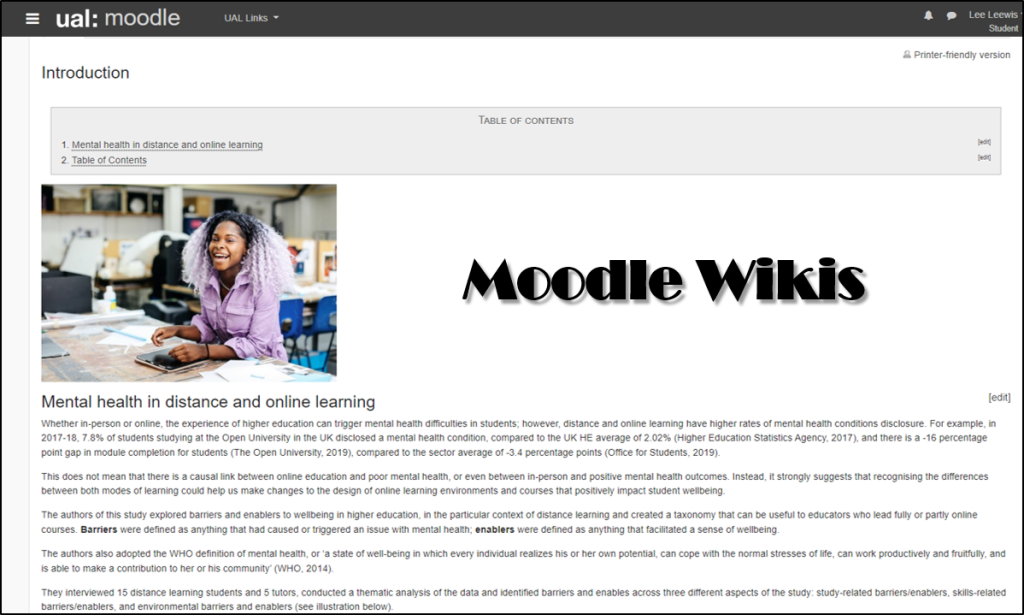
Using the Moodle Wiki for collaborative sharing and editing
This article introduces the Moodle Wiki, a versatile tool for group work, collaborative research, or building a database of shared knowledge. Collaborative tools like Miro and Padlet are becoming increasingly popular, but often these tools involve students contributing individually rather than working collaboratively. If you’re looking for a truly collaborative…
Written by
-
Capitalise on Captions
Captions for video content are embedded into everyday media consumption such as YouTube, Netflix and other social media platforms. As much as 92% of videos on mobile devices are viewed without sound. When students come into learning environments they have the expectation of captions on their educational media. It is…
Written by