
Most people associate text reading software with those with additional learning needs or visual impairments. These simple and often embedded tools can be used more widely, especially for those with neurodiversity needs.
We have all been spending more time in front of a computer screen since the pandemic hit. According to a survey by Vision Direct we are spending an average of 44 minutes more at our computers. It’s important to give your eyes a break from the screen when dealing with larger documents. Using text readers can support you, as well as your students, in a number of ways.
- Let the text reader speak aloud while you make your notes.
- Reduce eye strain from looking at the screen.
- Help you edit your own work and structure your text.
- Adapt your text to be more accessible as you now have a users viewpoint.
Read Aloud (Microsoft)
Read Aloud is embedded into Microsoft Word and Outlook. It is great for using with longer e-mails as it can help break down and understand what is being said or unpack complicated details. It is best to use them in desktop applications.


Immersive Reader
Immersive reader has more accessibility features such as changing the font, line focus, changing the background colour, and even changing the spacing. It is embedded in most Microsoft applications including Word, Teams, Forms, PowerPoint, and Sway.
- What is Immersive Reader? (17m44sec)
PowerPoint
Immersive Reader in PowerPoint is more complex; please note functionality may change from desktop app to browser versions. In the browser version you have ‘immersive reader’ embedded but it is not in the desktop app. In the browser version you can turn on text speak in the quick action tool bar. When it is activated, you need to highlight the text and click the speak icon to play and stop.
- Activating Speak in PowerPoint (2m42sec)
Text Readers in browsers
Let us look at 4 main browsers: Edge, Chrome, Safari and Firefox. Useful for online courses and frees you up for making notes as the text is spoken.
Edge
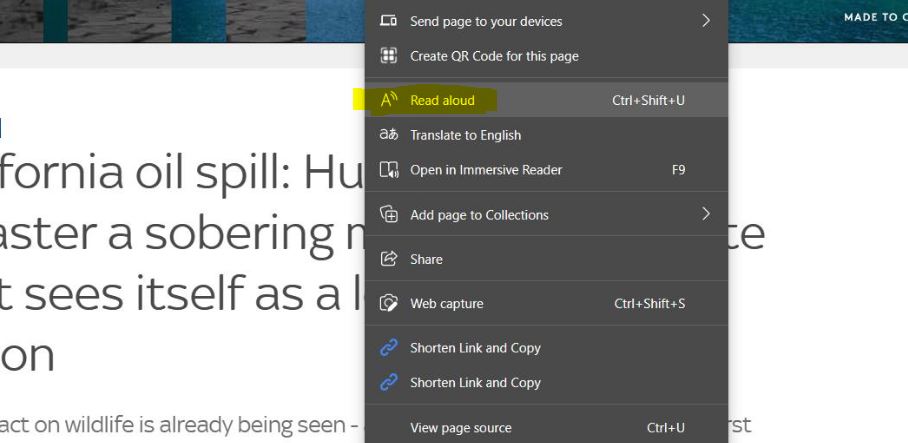
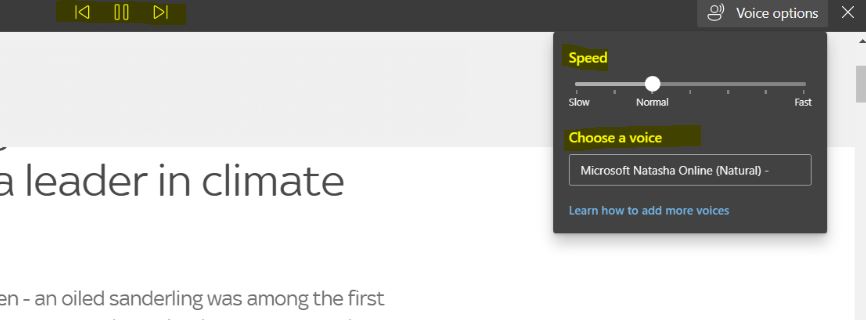
Edge has a built-in tool. All you need to do is right click to see ‘read aloud’ in the menu. Once selected, a play bar will pop up at the top of the screen. The voice is easy to change, can work in different languages and you can adjust the pace.
Chrome
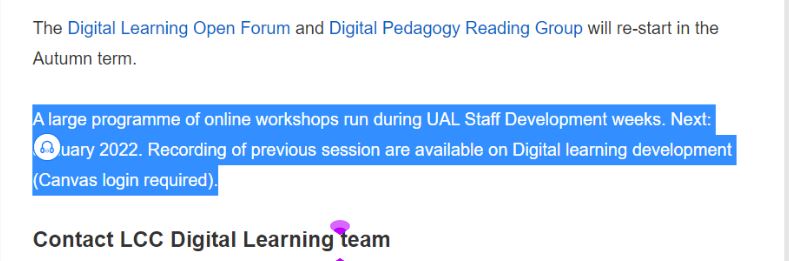
Hover over some text and a little headphone icon will appear. Once you click on it then a play button pops up. You are not able to change the voice or pace in the standard embedded tool. There are several extensions you can get for chrome which will give you more control. Some are free but they may only provide limited read time using the app in a 24-hour period.
Safari
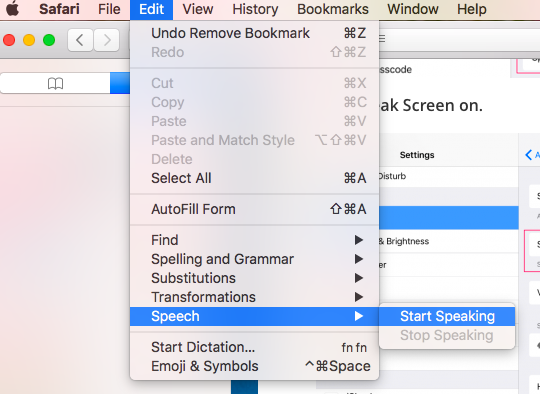
On the left hand side of your toolbar, select the ‘Edit’ option. From the drop down menu you should see an option which says ‘Speech’. Once you click on this, you can select ‘Start speaking’. Once you have completed your text reading if you’d like to end it you can go back to ‘Speech’ and choose ‘Stop speaking’.
Firefox
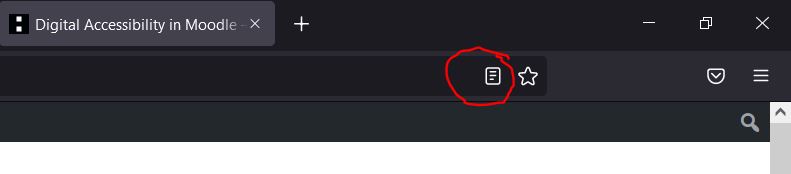
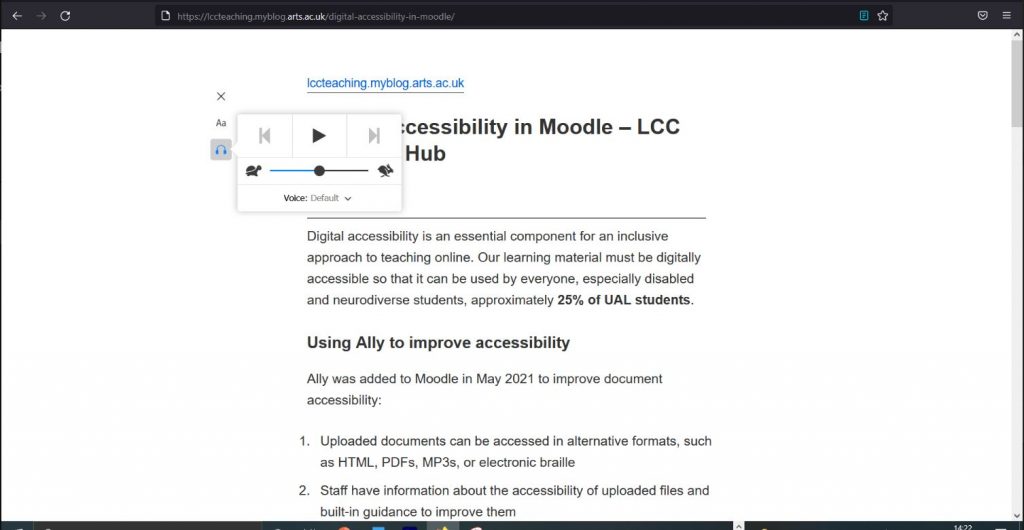
Firefox is another popular browser. Text reader works in this browser alongside reader view. Reader view simplifies a webpage by keeping only the essential information on the page. It declutters the page which can reduce visual noise and cognitive overload. The text reader sits alongside once you are in the reader view. The icon which looks like a page is next to the bookmark icon on the URL address bar.
For support please contact the LCC Digital Learning Team at lccdigitallearning@lcc.arts.ac.uk
Further resources:
- Make Things Accessible – a repository for accessibility guidance materials
- AT Hive – explore assistive technology (AT) and how it can help
- My Computer My Way – for advice on making your device easier to use if you have a disability
Leave a Reply
You must be logged in to post a comment.